Free Tool

Brain Rot Calculator

Take a fast doomscrolling test to see how your current social media habits may be affecting you and what steps you could take to claim your attention back.

What this brain rot test measures

This quiz measures behavior patterns linked to doomscrolling risk: daily feed time, check frequency, bedtime and morning phone habits, ability to stop, and self-reported concentration quality.

It does not diagnose mental health conditions. The goal is practical awareness: identify friction points and switch from reactive feeds to intentional reading routines.

Disclaimer: Educational tool only. If you are experiencing severe anxiety, depression, or inability to function, seek professional support.

Start the 2-minute brain rot test

You will answer 10 multiple-choice questions. No login required. Your score is not stored by Bilig.

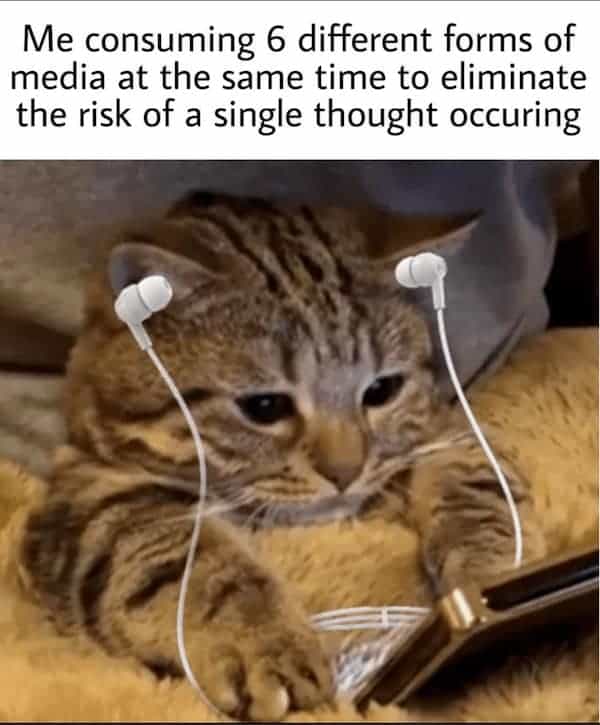
Me consuming 6 different forms of media at the same time meme

Why this matters for attention and learning

In a world where social media is taking over our lives, scrolling habits have come to define the state of our mental health. With terms like doomscrolling and brain rot dominating modern discourse, the measurable impact on our psychology is becoming clearer every day.

While this test is not intended to act as medical diagnosis or advice, it does seek to create awareness around the impact of social media habits on mental health.

One of the best ways to reclaim your attention and build a better information-consumption habit is to read written content.

This is what Bilig does through newsletters. Bilig is a newsletter reading and discovery tool that helps you find and read high-quality written content and reclaim your attention.

Practical next steps to reduce doomscrolling

  • Set one hard boundary first (for example, no social apps in bed).
  • Replace 20-30 minutes of feed time with long-form reading daily.
  • Track your habits weekly to avoid slipping back into reactive scrolling loops.

Frequently Asked Questions

What is a brain rot calculator?

It is a quick self-assessment of digital consumption habits such as scrolling time, stop-control, sleep impact, and focus quality. It is educational, not clinical.

Is this a medical diagnosis?

No. This tool does not diagnose mental health conditions. It highlights behavior patterns that may reduce attention quality and suggests practical next steps.

Do I need an account to take the test?

No. You can complete it without logging in.

Does Bilig store my score?

No. The score is calculated in your browser. If you share your result, it is encoded in the URL hash only.

How can I reduce doomscrolling?

Start with one boundary (for example, no phone in bed), replace 20 to 30 minutes of feed time with long-form reading, and review your habits weekly.

Why does Bilig recommend newsletters?

Because newsletters are easier to consume intentionally than algorithmic feeds. Bilig organizes them in one focused reading space, away from inbox clutter.